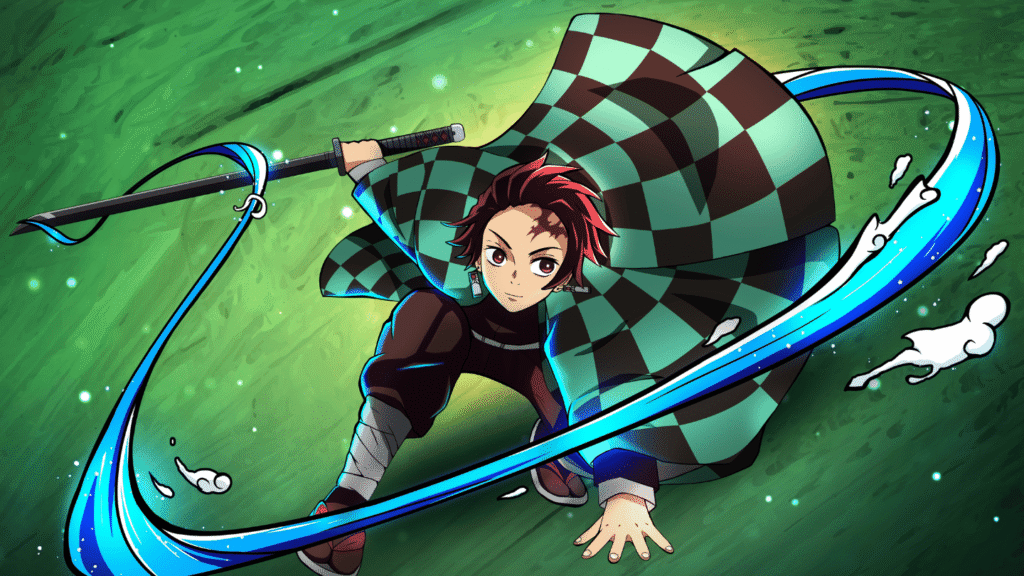
If you have walked through a convention hall, a Halloween store, or even a local mall recently, you have undoubtedly seen it: that striking green and black checkered pattern.
As the protagonist of the global phenomenon Demon Slayer: Kimetsu no Yaiba, Tanjiro Kamado is instantly recognizable by his outfit. But for many fans, cosplayers, and parents trying to buy the right gift, the terminology can get confusing. Is it a cape? A robe? A shirt?
To set the record straight: Tanjiro’s “shirt” is actually a traditional Japanese garment called a Haori (羽織).
The specific checkerboard design he wears is known historically as the Ichimatsu pattern. It isn’t just a random design choice by the anime’s creator; it carries a deep cultural history dating back to the 18th century and holds a heartbreaking significance regarding Tanjiro’s family.
In this guide, we will look past the cosplay and dive into the real history, meaning, and cultural symbolism behind the most famous jacket in anime.
The Garment: What Exactly is a Haori?
To understand Tanjiro’s look, we first need to use the correct vocabulary. While it is easy to search for “Tanjiro’s shirt” online, the item of clothing he wears over his uniform is distinct from a shirt or a kimono.
Defining the Haori
A Haori is essentially a traditional Japanese jacket. Unlike a kimono, which is wrapped tight and secured with a wide sash (an obi), a haori is meant to hang loosely. It is worn open at the front, usually meant to protect the kimono underneath from dust or cold weather.
If you look closely at Tanjiro’s character design:
- It has no belt: It flows freely behind him during fight scenes, giving that dynamic, cape-like effect.
- The Length: It is typically hip-to-thigh length (though Tanjiro’s is slightly longer for dramatic effect).
The Clash of Styles
One of the reasons Tanjiro’s design stands out so much is because of what he wears under the Haori.
The story of Demon Slayer takes place during Japan’s Taisho Era (1912–1926), a unique period where Western influence began mixing with Japanese tradition. Tanjiro wears the standard Demon Slayer Corps uniform, which is modeled after a Gakuran, a Prussian-style military uniform with a standing collar, often seen in Japanese school uniforms.
By wearing a traditional Haori over a militaristic Gakuran, Tanjiro visually bridges the gap between the old world of samurai tradition and the modernizing world that is slowly forgetting them.
The Pattern: The History of “Ichimatsu”
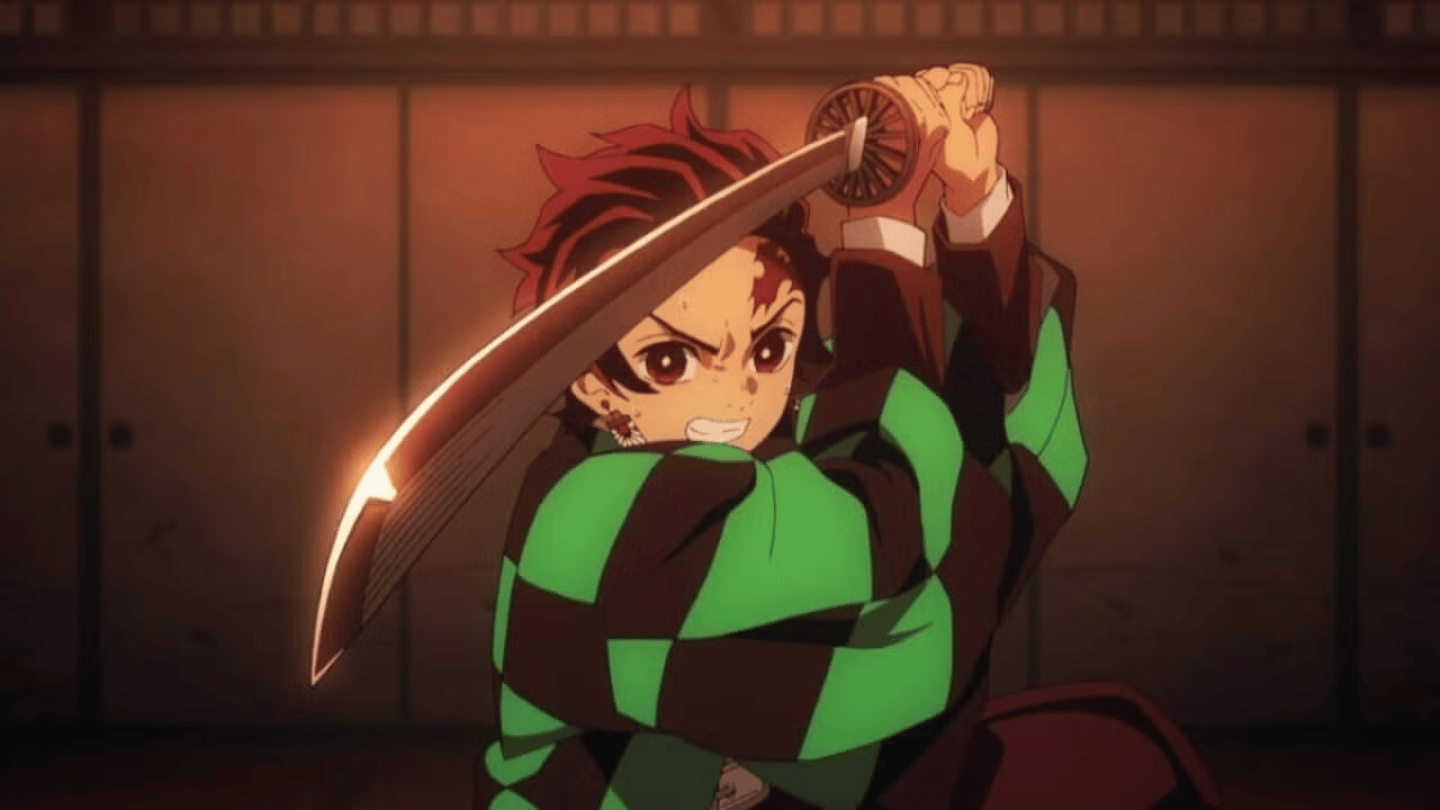
While modern fans might call it a “chessboard” or “checkered” print, in Japan, this specific design has a distinct name and a history that predates anime by centuries.
The pattern is called Ichimatsu (市松).
From Kabuki to Pop Culture
Originally, this pattern was known as Ishidatami (paving stones) because of its resemblance to the stone paths of Japanese shrines. However, its name changed in the mid-Edo period (18th century) thanks to a celebrity of that era.
A famous Kabuki actor named Sanogawa Ichimatsu (1722–1762) wore trousers with this white and navy checkerboard design during his stage performances. He was so popular that the pattern became a fashion trend among his fans and was eventually renamed “Ichimatsu” in his honor.
What Does the Pattern Mean?
In Japanese culture, patterns are rarely just aesthetic; they almost always carry a wish or a blessing.
Because the Ichimatsu pattern repeats infinitely in all directions without interruption, it symbolizes:
- Prosperity of descendants: The wish that a family line will continue forever.
- Business expansion: Uninterrupted growth and success.
- Longevity: A life without end or interruption.
This meaning is so significant to Japanese identity that a stylized version of the Ichimatsu pattern was chosen as the primary logo for the Tokyo 2020 Olympic Games, representing “unity in diversity.”
Symbolism in Demon Slayer: Why Tanjiro?
Once you understand that the Ichimatsu pattern symbolizes “eternal family prosperity” and “long life,” Tanjiro’s outfit takes on a much deeper, more tragic meaning.
The Heartbreaking Irony
At the very beginning of the series, Tanjiro loses almost his entire family to a demon attack. The Kamado family line is nearly extinguished in a single night.
For Tanjiro to wear a pattern that represents “unbroken family prosperity” is a cruel irony. However, it also serves as a symbol of his resolve. He is not just fighting for himself; he is carrying the weight of his ancestors and the future of his only surviving family member, his sister Nezuko.
The Visual Bond with Nezuko
If you look closely at Nezuko Kamado, you will notice that she also wears the Ichimatsu pattern, though hers is on her obi (sash) and is colored red and white.
This subtle design choice visually binds the two siblings together. In a world of demons and different breathing styles, their matching patterns remind the audience that they are the last remnants of the Kamado line. They are the “unbroken” thread that the pattern represents.
Why Green and Black?
While the traditional Ichimatsu is white and navy (blue), Tanjiro’s is a distinct black and “seaweed green”.
- Green is often associated with youth, vitality, and nature in Japan.
- The Roots: Tanjiro was a charcoal seller from the mountains. The earthy green reflects his humble, grounded upbringing, contrasting sharply with the flashy, bright colors worn by other characters like Zenitsu (yellow) or Rengoku (flame orange).
Beyond Tanjiro: Decoding Other Characters
To truly understand the depth of Demon Slayer’s character design, we have to look beyond the protagonist. The creator, Koyoharu Gotouge, used traditional Japanese patterns (Wagara) to hint at the personalities and fates of other key characters.
Here is a breakdown of the hidden meanings behind the other famous patterns you see in the series:
Nezuko Kamado: The Hemp Leaf (Asanoha)
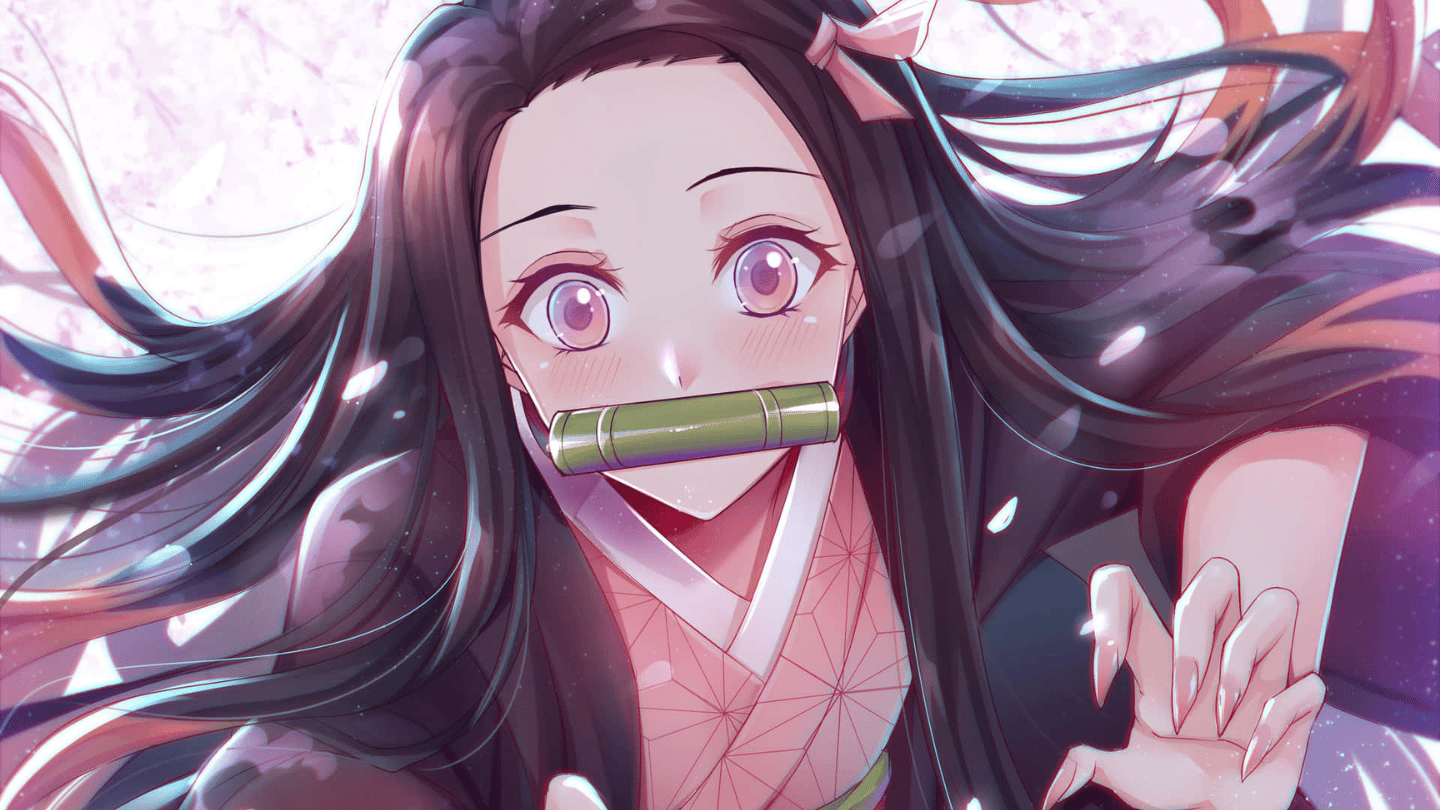
Nezuko wears a pink kimono with a geometric star-like pattern.
- The Name: Asanoha (麻の葉).
- The Meaning: This pattern represents the hemp leaf. In ancient Japan, hemp was known for growing straight, tall, and incredibly fast, up to 4 meters in a few months.
- Cultural Context: Because hemp is strong and resilient, parents historically used Asanoha fabric for babies’ and children’s clothes, hoping their children would grow up healthy and ward off evil spirits. It perfectly fits Nezuko, the younger sister Tanjiro is desperately trying to protect and “grow” back into humanity.
Zenitsu Agatsuma: The Scales (Uroko)
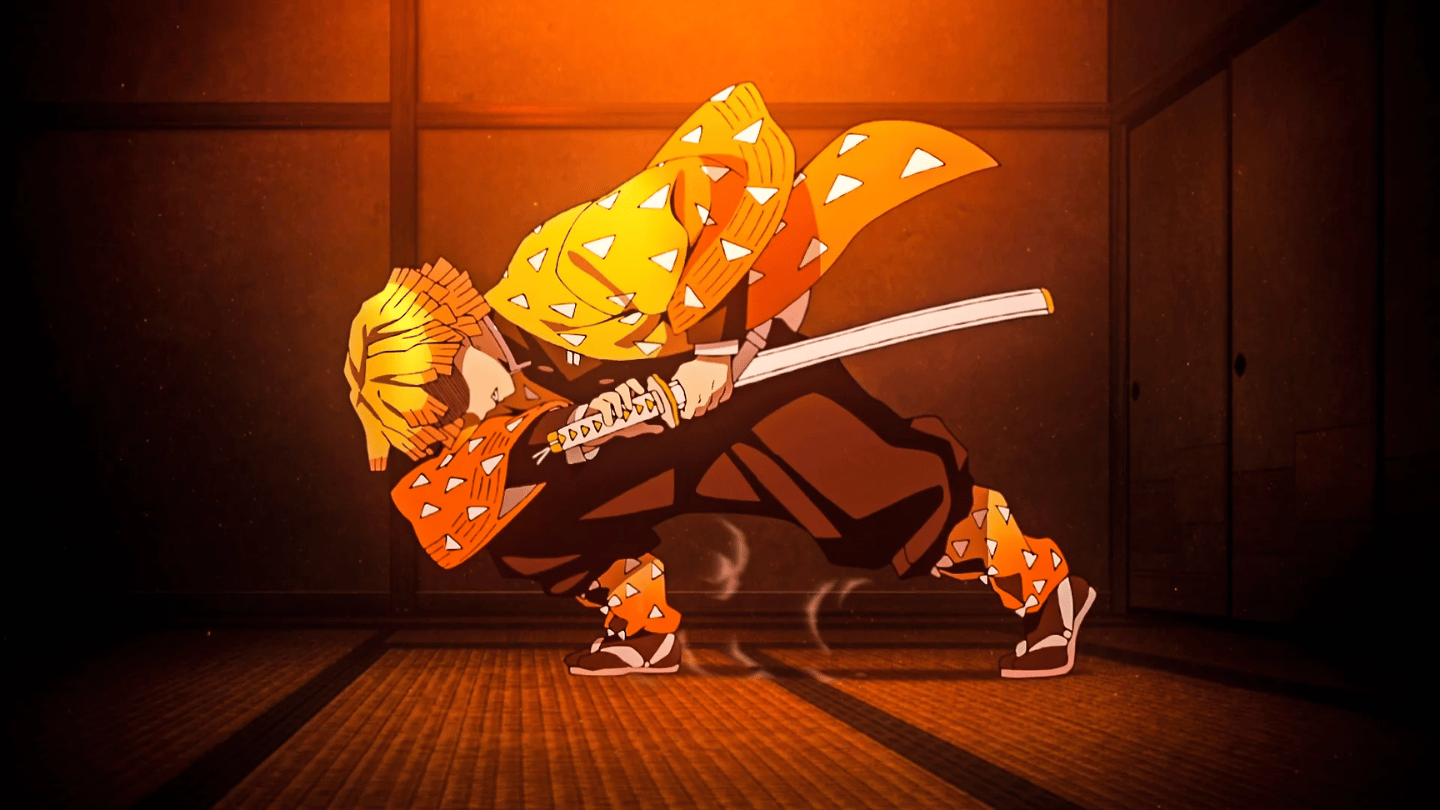
Zenitsu wears a bright yellow haori with white triangles.
- The Name: Uroko (鱗).
- The Meaning: This pattern symbolizes scales (like those of a snake, fish, or dragon).
- Cultural Context: Just as a snake sheds its skin to remove parasites and renew itself, the Uroko pattern symbolizes protection from bad luck, curses, and evil. It represents rebirth and survival, fitting for Zenitsu, a coward who “sheds” his fear to become a powerful warrior when he sleeps.
Giyu Tomioka: The Tortoise Shell (Bishamon-Kikkou)
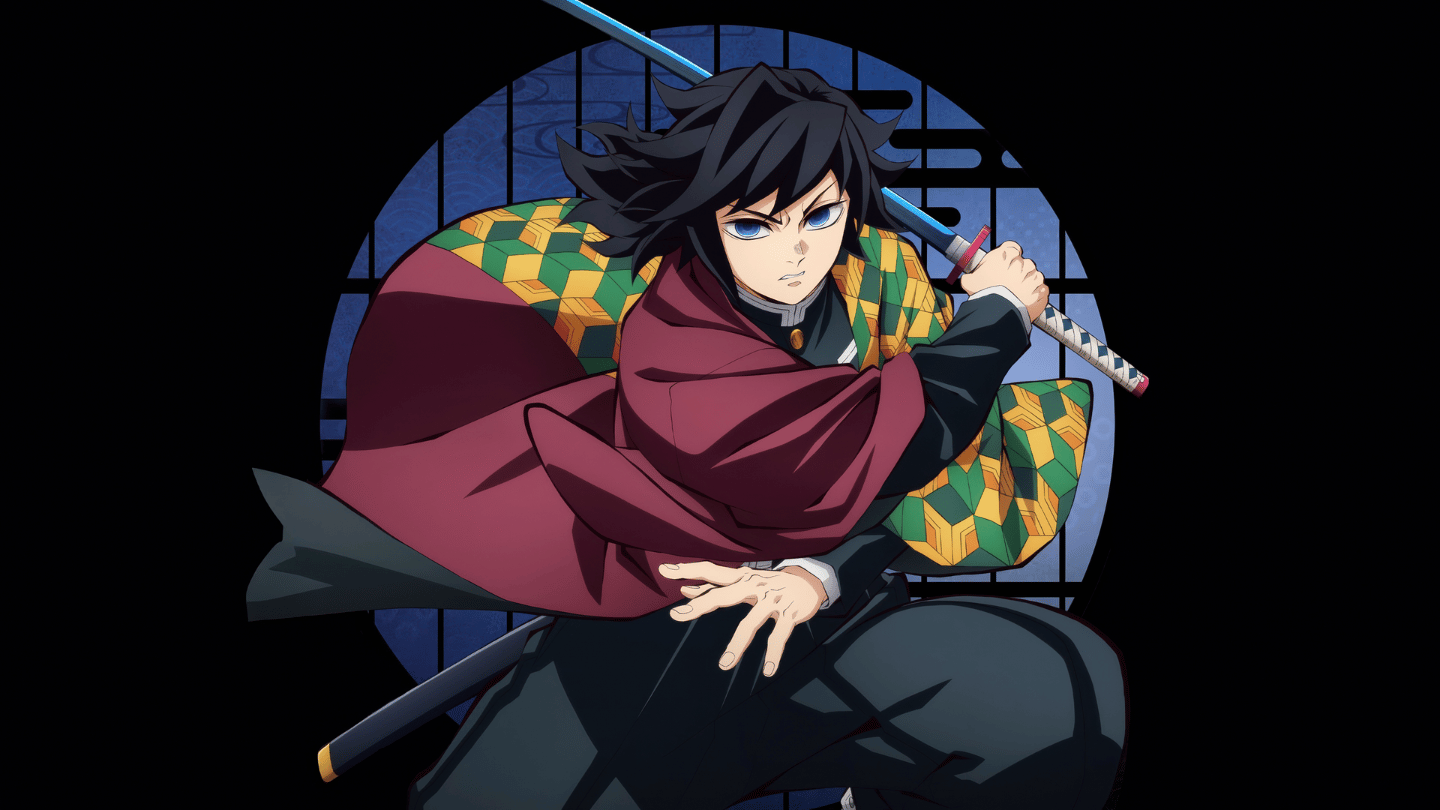
The Water Hashira wears a haori split down the middle. One side is a solid maroon (a memorial to his sister), and the other is a geometric pattern of green and yellow hexagons.
- The Name: Bishamon-Kikkou.
- The Meaning: The hexagon shape represents a tortoise shell (Kikkou), symbolizing longevity (as tortoises live for a long time).
- Cultural Context: The specific variation Giyu wears is linked to Bishamonten, the Buddhist god of war and warriors. It is a prayer for victory and long life in battle.
For Cosplayers & Shoppers: Getting the Details Right
If you are looking to buy a Tanjiro haori for a cosplay, a Halloween costume, or a gift, not all replicas are created equal. Because the design is so popular, many low-quality versions miss the key historical details.
Here is what you need to look for to ensure you are getting an anime-accurate garment:
1. Check the Pattern Symmetry
The Ichimatsu pattern consists of perfect squares.
- Common Flaw: Many mass-produced “costume” versions use rectangles or elongated checkers.
- The Fix: Look for a pattern where the width and height of the checkers are equal. In the anime, the pattern is meticulously symmetrical.
2. The “Seaweed” Green
Color is the biggest giveaway of a cheap replica.
- Avoid: Bright, neon, or “digital” green. This looks artificial and clashes with the Taisho-era aesthetic.
- Look For: A deep, earthy teal or “Seaweed Green”. It should look slightly muted, matching the natural dyes that would have been used in early 20th-century Japan.
3. Keywords for Searching
When shopping on sites like Amazon, Etsy, or specialized anime retailers, using the right terminology yields better results.
- Good: “Tanjiro Haori,” “Kimetsu no Yaiba Kimono Cardigan.”
- Bad: “Tanjiro Shirt,” “Demon Slayer Cape.”
By using the word “Haori,” you are more likely to find sellers who understand the construction of the garment, meaning you’ll get wide, kimono-style sleeves rather than tight, T-shirt style sleeves.
Conclusion
So, what is Tanjiro’s shirt called? It is a Haori, and it bears the Ichimatsu pattern.
But as we’ve learned, it is much more than just a costume. It is a visual link to Japanese history, a nod to the Kabuki theater of the 1700s, and a silent prayer for the prosperity of a family that has lost nearly everything.
The next time you watch Demon Slayer, take a closer look at what the characters are wearing. In a series about fighting demons, the clothes they wear are their armor, woven with history, meaning, and the hope for a brighter future.
Frequently Asked Questions
Q: Is Tanjiro’s shirt green and black or teal and black?
A: While it can appear teal or bright turquoise in some fan art and cosplay replicas, the official color description is a deep “Seaweed Green” paired with black. The anime utilizes a muted, earthy green to reflect Tanjiro’s humble origins as a charcoal seller living in the mountains, distinct from the brighter colors worn by other characters.
Q: Can I wear a Haori in everyday life?
A: Absolutely. In modern Japanese fashion, the Haori has seen a resurgence as a stylish, casual outerwear option. It is often worn over T-shirts and jeans as a light cardigan. You don’t need to be in full cosplay to wear one; many fashion brands now sell modern Haori with contemporary patterns (including the Ichimatsu) for street wear.
Q: Did the anime invent this pattern?
A: No, the creators of Demon Slayer did not invent the checkered design. The Ichimatsu pattern dates back to the Edo period (18th century). It was originally popularized by the Kabuki actor Sanogawa Ichimatsu and has been a staple of Japanese textile design for hundreds of years, long before Tanjiro Kamado ever appeared on screen.

They are a passionate group of entertainment writers, pop culture enthusiasts, and streaming industry analysts dedicated to bringing readers the latest updates from the world of movies, TV shows, anime, web series, and digital entertainment. From honest reviews and streaming guides to celebrity news, fan theories, and trending entertainment insights, the team delivers engaging, timely, and reader-focused content designed for modern binge-watchers and entertainment fans worldwide. Team HollyFlixTV helps audiences discover what’s worth watching across platforms like Netflix, Disney+, Prime Video, Hulu, and beyond.